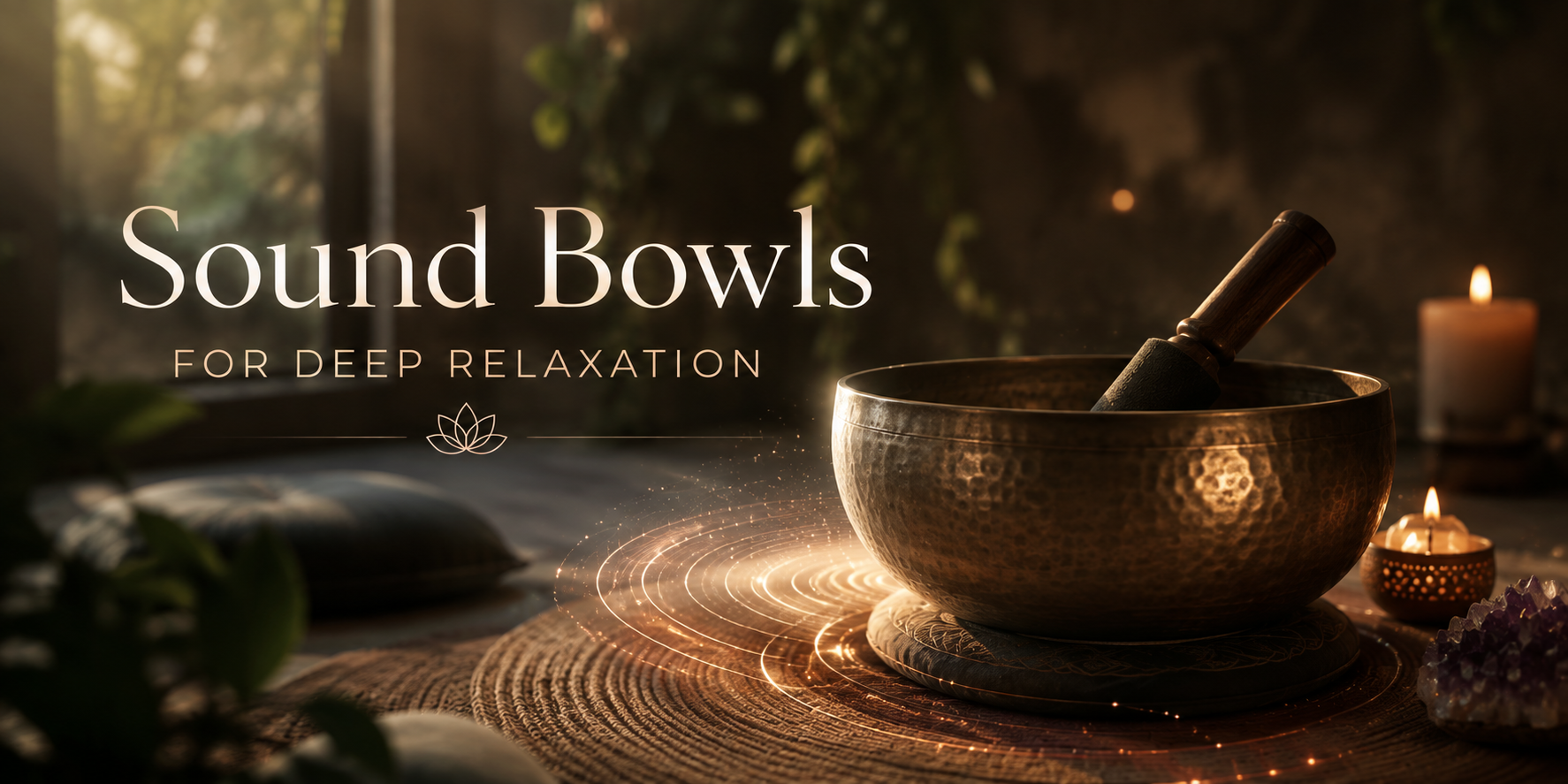
A singing bowl does not sound like a simple musical note.
Strike one and you hear more than a single pitch. There is an initial tone, layers of overtones, subtle beating between frequencies, and a long decay that gradually disappears into silence.
That changing sound is part of what makes singing bowls so compelling for meditation.
You do not have to analyze the sound. You simply listen. The sound becomes an anchor for attention, giving the mind something steady to follow while the rest of the body begins to settle.
Singing bowls have become increasingly popular in meditation, yoga and sound-based relaxation practices, and there is a growing scientific interest in what happens when people listen to them.
The research is still developing, and it does not support the idea that a singing bowl can cure illness. But early evidence suggests that singing-bowl sound sessions may promote short-term relaxation and reduce subjective anxiety in some settings.
That makes them worth exploring, not because they are magic, but because sound can become a surprisingly powerful way to create space for stillness.
What makes a singing bowl sound different
A struck singing bowl produces a complex sound rather than one perfectly isolated frequency. Its vibration contains a fundamental tone together with multiple overtones. As the bowl continues to vibrate, the sound changes and gradually fades.
This is very different from listening to a pure sine wave that remains almost perfectly constant.
The result is a sound with movement inside it. You may notice the tone appearing to shimmer, pulse or slightly fluctuate as different components interact. That changing acoustic texture can make the sound easier to listen to for an extended period, because there is always something subtle happening.
You do not have to concentrate intensely. You can simply follow the sound as it rises, changes and disappears.
Why the sound can feel so immersive
One reason sound works well in meditation is that it provides an external object for attention. Instead of trying to force your thoughts to stop, you give your attention somewhere to go.
Listen to the first strike. Notice the brightest part of the tone. Follow the vibration as it becomes softer. Notice the moment when you can no longer hear it. Then wait for the next sound.
This turns listening itself into a mindfulness practice.
There is also growing interest in the acoustic properties of singing bowls. One small experimental study examined the beating produced by a singing bowl and found synchronization between the sound's beat frequency and measured brain-wave activity. The researchers suggested that this type of sound may help facilitate meditation and relaxation.5
However, the study was very small, involving only 17 participants. It should therefore be treated as interesting preliminary evidence rather than proof of a universal neurological effect.
What research actually says
The most useful evidence so far comes from research looking at relaxation and anxiety, rather than claims about specific "healing" frequencies.
A randomized controlled study involving 50 adults with high state anxiety compared Tibetan singing-bowl sound treatment with progressive muscle relaxation and a waiting-list control. After a single session, the singing-bowl group showed reductions in self-reported anxiety compared with the waiting-list group. The study also observed changes in heart-rate variability and EEG measures.1
These findings are encouraging. But they do not mean that singing bowls are a treatment for anxiety disorders. The study examined an acute response after a single session, and the sample was relatively small.
The broader music-intervention literature is stronger. A large systematic review and meta-analysis covering 104 randomized controlled trials and 9,617 participants found that music interventions were associated with reductions in both psychological and physiological stress outcomes.3
This does not prove that singing bowls are uniquely effective. It does suggest that carefully chosen sound and music can be useful components of relaxation practices.
That distinction matters. The evidence supports exploring sound as a relaxation tool. It does not support promising medical cures.
Listening to singing bowls at home
You do not need a physical singing bowl to begin. A recorded singing-bowl session can provide an accessible way to experiment with sound meditation at home.
The goal is not to recreate every physical sensation of being in a room with a real bowl. The goal is to create an uninterrupted listening environment.
Choose a quiet place. Use comfortable headphones or speakers at a moderate volume. Give the sound enough space to decay naturally. Avoid skipping between tracks every few seconds.
Let the sound finish. Then notice what happens in the silence that follows. That silence is part of the experience too.
If headphones feel too immersive, use speakers. If the sound feels uncomfortable or irritating, lower the volume or stop. Relaxation should never become a test of endurance.
A five-minute sound meditation
You can turn a singing-bowl recording into a simple five-minute meditation.
Minute 1: Arrive. Sit or lie comfortably. Let your shoulders drop. Notice the room around you. Do not try to change your breathing. Simply arrive.
Minutes 2 and 3: Listen. Let the singing bowl become the center of your attention. Notice the first strike. Follow the tone. Listen to the overtones. Notice how the sound changes as it becomes quieter. When your mind wanders, gently return to the sound.
Minute 4: Listen to the silence. When the bowl disappears, do not immediately search for another thought. Notice the silence that remains. Then allow the next sound to arrive.
Minute 5: Return. Notice your breathing. Notice your body. Notice whether anything feels different from five minutes ago.
There is nothing you need to achieve. The practice is simply listening.
How to use singing bowls with Imuzar
This is where sound becomes a daily practice.
You can use singing-bowl sounds when you want to:
- slow down after a busy day
- create a transition between work and rest
- prepare for meditation
- take a short mindful break
- create a calmer environment before sleep
- or simply spend a few minutes listening without doing anything else
Inside Imuzar, sound is not meant to be something you play in the background and forget. It can become part of a small ritual.
Choose a sound. Choose a comfortable place. Give yourself five or ten minutes. Listen. Breathe naturally. Return whenever your attention wanders.
Over time, the value is not necessarily in finding one perfect sound. It is in creating a reliable moment in your day when you stop, listen and return to yourself.
Your Imuzar sound moment
Choose one singing-bowl session. Put your phone aside. Lower the lights. Let the first tone fill the room. Follow it until it disappears. Stay with the silence for a few seconds. Then begin again. Five quiet minutes are enough to start.
Key takeaways
- Singing bowls produce complex sounds containing a fundamental tone, overtones and a gradual decay.
- Their changing acoustic texture can provide a simple object for mindful attention.
- Early research suggests that singing-bowl sessions may promote short-term relaxation and reduce subjective anxiety in some people.
- The broader scientific literature supports the use of music and sound-based interventions for reducing stress, although this evidence does not establish singing bowls as uniquely therapeutic.
- There is currently no strong evidence that a particular singing-bowl frequency can cure disease or repair the body.
- You do not need a physical bowl to begin exploring sound meditation.
- The most useful approach is simple: listen, notice, breathe, return.
References
Imuzar articles are based on peer-reviewed scientific research and trusted academic sources whenever applicable.
- Rio-Alamos C, Montefusco-Siegmund R, Cañete T, Sotomayor J, Fernandez-Teruel A. Acute Relaxation Response Induced by Tibetan Singing Bowl Sounds: A Randomized Controlled Trial. https://pubmed.ncbi.nlm.nih.gov/36826208/
- Kim H-S, Kim E-J. Effects of Relaxation Therapy on Anxiety Disorders: A Systematic Review and Meta-analysis. https://pubmed.ncbi.nlm.nih.gov/29579524/
- de Witte M, Spruit A, van Hooren S, Moonen X, Stams G-J. Effects of music interventions on stress-related outcomes: A systematic review and two meta-analyses. https://pubmed.ncbi.nlm.nih.gov/31167611/
- de Witte M, da Silva Pinho A, Stams G-J, Moonen X, Bos AER, van Hooren S. Music therapy for stress reduction: a systematic review and meta-analysis. https://pubmed.ncbi.nlm.nih.gov/33176590/
- Does the Sound of a Singing Bowl Synchronize Meditational Brainwaves in the Listeners? https://pubmed.ncbi.nlm.nih.gov/37372766/
Frequently asked questions
Do singing bowls really help with relaxation?
Early research suggests that singing-bowl sound sessions can produce short-term relaxation and may reduce subjective anxiety in some people.
However, the research is still developing, and results from singing-bowl studies should not be generalized into claims that they treat medical conditions.
Do I need a real singing bowl?
No. A physical bowl provides an acoustic and tactile experience, but a high-quality recording can be an accessible way to explore sound meditation.
The most important part of the practice is creating a quiet period in which you can listen without interruption.
Can singing bowls reduce anxiety?
A randomized controlled study found that a single Tibetan singing-bowl session was associated with reduced self-reported anxiety in adults with high state anxiety.
However, this does not mean singing bowls are a treatment for anxiety disorders. More research is needed to understand how large and lasting these effects are.
Do singing bowls change brain waves?
One small study found synchronization between a singing bowl's beat frequency and measured EEG activity.
The study involved only 17 participants, so it should be considered preliminary evidence rather than proof that singing bowls reliably change brain waves in everyone.
Is there a specific singing-bowl frequency that heals the body?
There is currently not enough high-quality evidence to say that a particular singing-bowl frequency heals the body or treats a specific disease.
Different tones can create different listening experiences, and many people enjoy particular sounds for relaxation or meditation. The experience can be meaningful without requiring a medical claim.
How long should I listen?
There is no universally established ideal duration for singing-bowl listening.
Start with five to ten minutes and see how you respond. If the experience feels comfortable and useful, you can gradually make it part of a longer meditation or relaxation routine.
Can I listen before sleep?
Yes, if you find the sound relaxing. Keep the volume comfortable and choose a track that does not contain sudden loud sounds.
The goal is to create a calm transition toward rest rather than to force sleep.
Can I use singing bowls during meditation?
Yes. The sound can serve as an external anchor for attention.
Instead of trying to stop your thoughts, repeatedly return your attention to the changing sound and the silence between tones.